


[Research Report] A Nationwide Survey on Cancer in Japan: 20 Years Since the Enactment of the Cancer Control Act (April 28, 2026)
date : 4/28/2026
Tags: Cancer, NCDs, Precision Cancer Medicine

![[Research Report] A Nationwide Survey on Cancer in Japan: 20 Years Since the Enactment of the Cancer Control Act (April 28, 2026)](https://hgpi.org/en/wp-content/uploads/sites/2/HGPI_20260421_Research-Report-Cancer-PJT.png)
* The English version of this report will be published at a later date.
Health and Global Policy Institute (HGPI) conducted a nationwide survey on cancer in February 2026, targeting 10,000 men and women aged 20 years and over across Japan.
Since 2005, shortly after its establishment, HGPI has continuously conducted surveys and policy advocacy activities on the state of cancer care and health policy, focusing on what patients and citizens expect.
As Japan marks 20 years since the enactment of the Cancer Control Act in 2006, the societal conditions and the environment surrounding healthcare have undergone significant changes. In this context, advancing cancer care in the right direction requires not only the perspectives of patients and those affected, but also broader societal discussions including the sustainability of the healthcare delivery system and the social security system.
Against this backdrop, this survey was conducted with the aim of examining the future direction of the healthcare system surrounding cancer from multiple perspectives, targeting citizens including cancer patients and those affected. This survey covers a wide range of topics, including: knowledge of cancer treatment, attitudes toward the centralization of medical functions, participation in cancer screening, perceptions of cancer genomic medicine, and perceptions of medical costs and the healthcare system.
[Survey Overview]
- Target: Men and women aged 20 years and over residing in Japan
- Survey Method: Online survey
- Valid Responses: 10,000
- Survey Period: February 2026
- Sampling Method: Adjusted by region, age group, and gender
* This survey was conducted with a broad range of respondents to visualize the awareness and expectations of citizens, including cancer patients and those affected. Therefore, prior cancer experience was not set as a condition for sampling. Among respondents, 9% had a history of cancer themselves, approximately 35% had a family member within the second degree with a history of cancer, and approximately 38% had either a personal or family history of cancer.
Related Posts
-
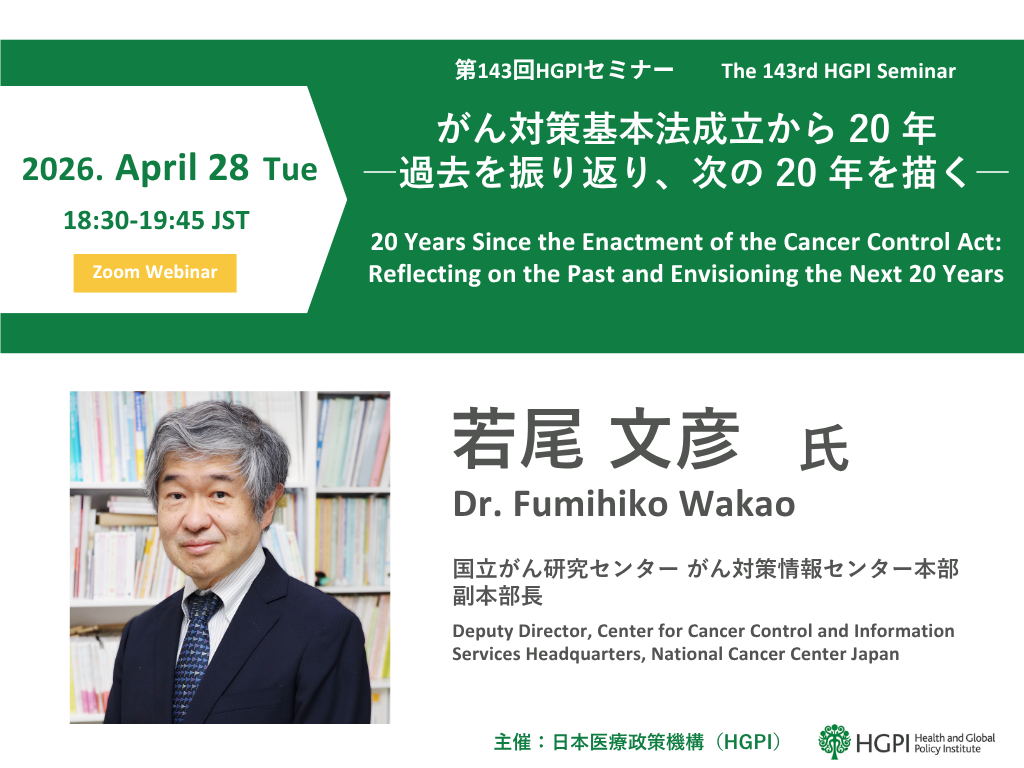
2026-04-01
[Registration Open] (Webinar) The 143rd HGPI Seminar “20 Years Since the Enactment of the Cancer Control Act: Reflecting on the Past and Envisioning the Next 20 Years” (April 28, 2026)
-
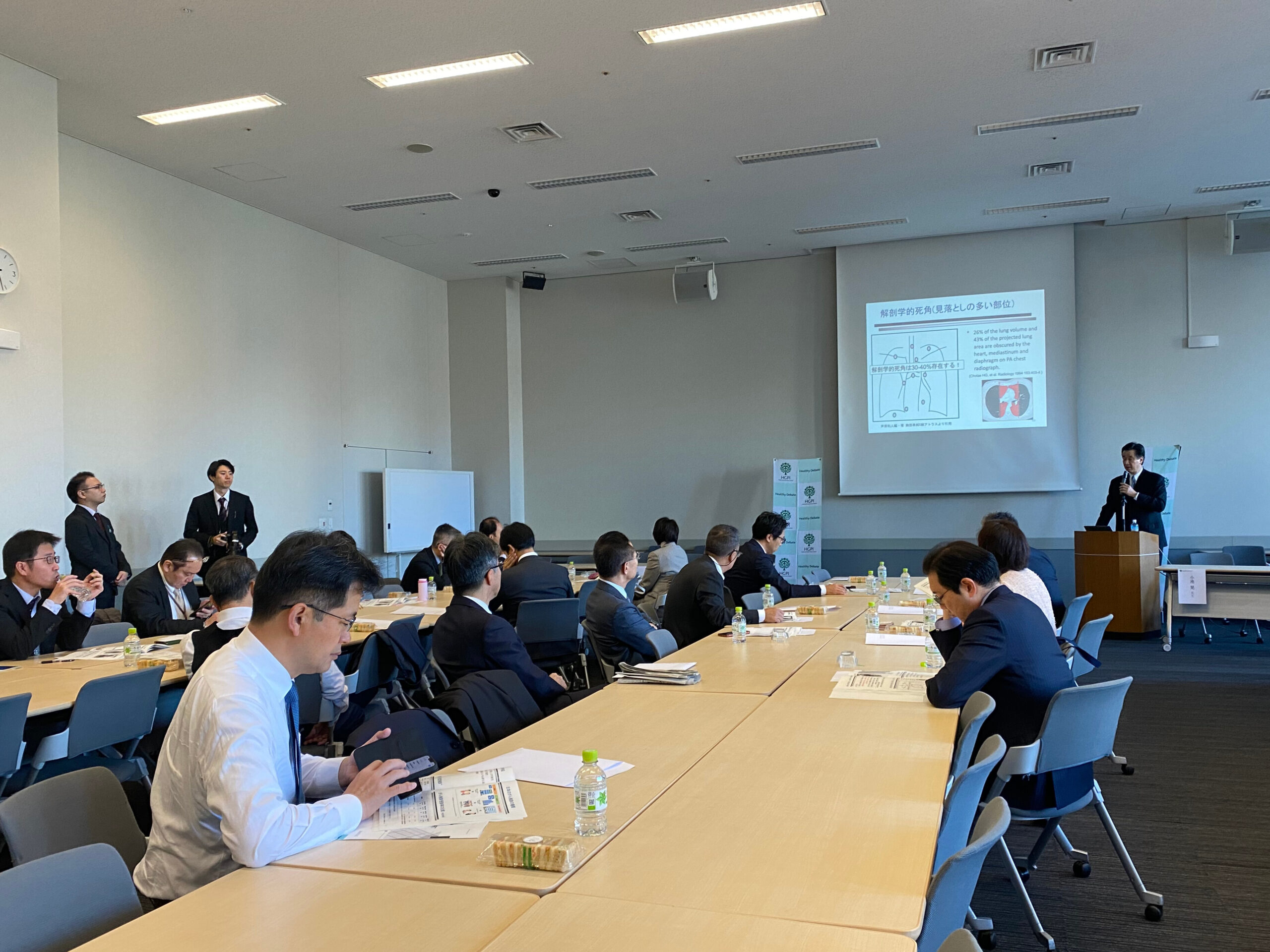
2025-12-18
[Event Report] Non-partisan Diet Member Briefing – 30-minute Health Policy Update “Current Status and Challenges of Lung Cancer Screening” (December 17, 2025)
-
2025-12-16
[Discussion Points] Policy Dialogue “Considering Comprehensive Genomic Profiling from the Perspective of Patient Access: Utilizing the Medical Service Fee Reimbursement System and the Mixed Medical Services Program to Meet the Needs of Today” (November 28, 2025)
-
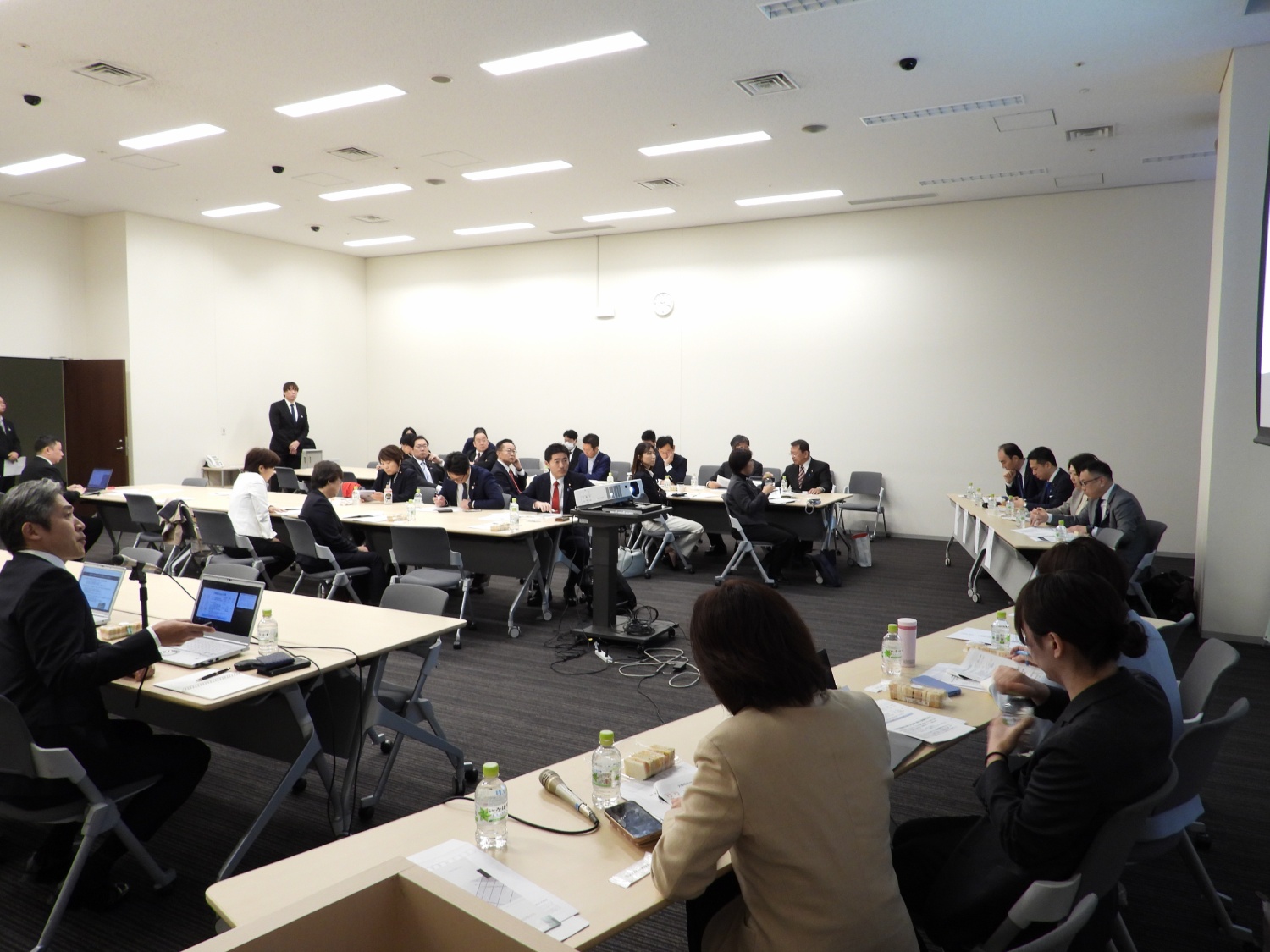
2025-12-12
[Event Report] Non-partisan Diet Member Briefing – 30-minute Health Policy Update “The Best Investment is Prevention – Controlling Healthcare Costs and the Strategic Use of Colorectal Cancer Screening” (November 26, 2025)
Top Research & Recommendations Posts
- [Research Report] Energy Conservation and Greenhouse Gas Emissions Reduction in Healthcare Facilities: Case Studies from New Construction and Facility Renewal (March 16, 2026)
- [Public Comment Submission] “The 7th Science, Technology and Innovation Basic Plan” (Draft) (February 19, 2026)
- [Research Report] Perceptions, Knowledge, Actions and Perspectives of Healthcare Organizations in Japan in Relation to Climate Change and Health: A Cross-Sectional Study (November 13, 2025)
- [Research Report] The 2026 Public Opinion Survey on Healthcare in Japan (February 13, 2026)
- [Research Report] The 2025 Public Opinion Survey on Healthcare in Japan (March 17, 2025)
- [Policy Recommendations] Policy Recommendations in the Field of Blood Disorders “Building a Healthcare Ecosystem Centered on Patients and Those Affected” (April 13, 2026)
- [Policy Recommendations] Developing a National Health and Climate Strategy for Japan (June 26, 2024)
- [Public Comment Submission] R&D and Social Implementation Plan for “Achieving Carbon Neutrality in the Waste and Resource Circulation” under the Green Innovation Fund Projects (Draft Revision) (March 25, 2026)
- [Policy Recommendations] Mental Health Project: Recommendations on Three Issues in the Area of Mental Health (July 4, 2025)
- [Research Report] Survey of Japanese Nursing Professionals Regarding Climate Change and Health (Final Version) (November 14, 2024)
Featured Posts
-
2026-02-13
[Research Report] The 2026 Public Opinion Survey on Healthcare in Japan (February 13, 2026)
![[Research Report] The 2026 Public Opinion Survey on Healthcare in Japan (February 13, 2026)](https://hgpi.org/en/wp-content/uploads/sites/2/HGPI_The2026PublicOpinionSurveyOnHealthcareInJapan_20260213.jpg)
-
2026-04-01
[Registration Open] (Webinar) The 143rd HGPI Seminar “20 Years Since the Enactment of the Cancer Control Act: Reflecting on the Past and Envisioning the Next 20 Years” (April 28, 2026)
-
2026-04-15
[HGPI Policy Column] (No.70) — From the Planetary Health Project “Part 17: The Lancet Countdown: A ‘Lifeline’ for Health and Economy Brought about by Climate Action”
![[HGPI Policy Column] (No.70) — From the Planetary Health Project “Part 17: The Lancet Countdown: A ‘Lifeline’ for Health and Economy Brought about by Climate Action”](https://hgpi.org/en/wp-content/uploads/sites/2/HGPI_20260410_Lancet-Countdown-Column.png)
